Mudah
Modernising Malaysia’s largest online marketplace, one seam at a time.
Mudah
40%
Average page load times trimmed by more than two-fifths after the move off PHP — the front of the funnel that had been quietly costing sessions.
3×
Concurrent-user headroom — the same hardware envelope, the same traffic patterns, three times the simultaneous load before anything bent.
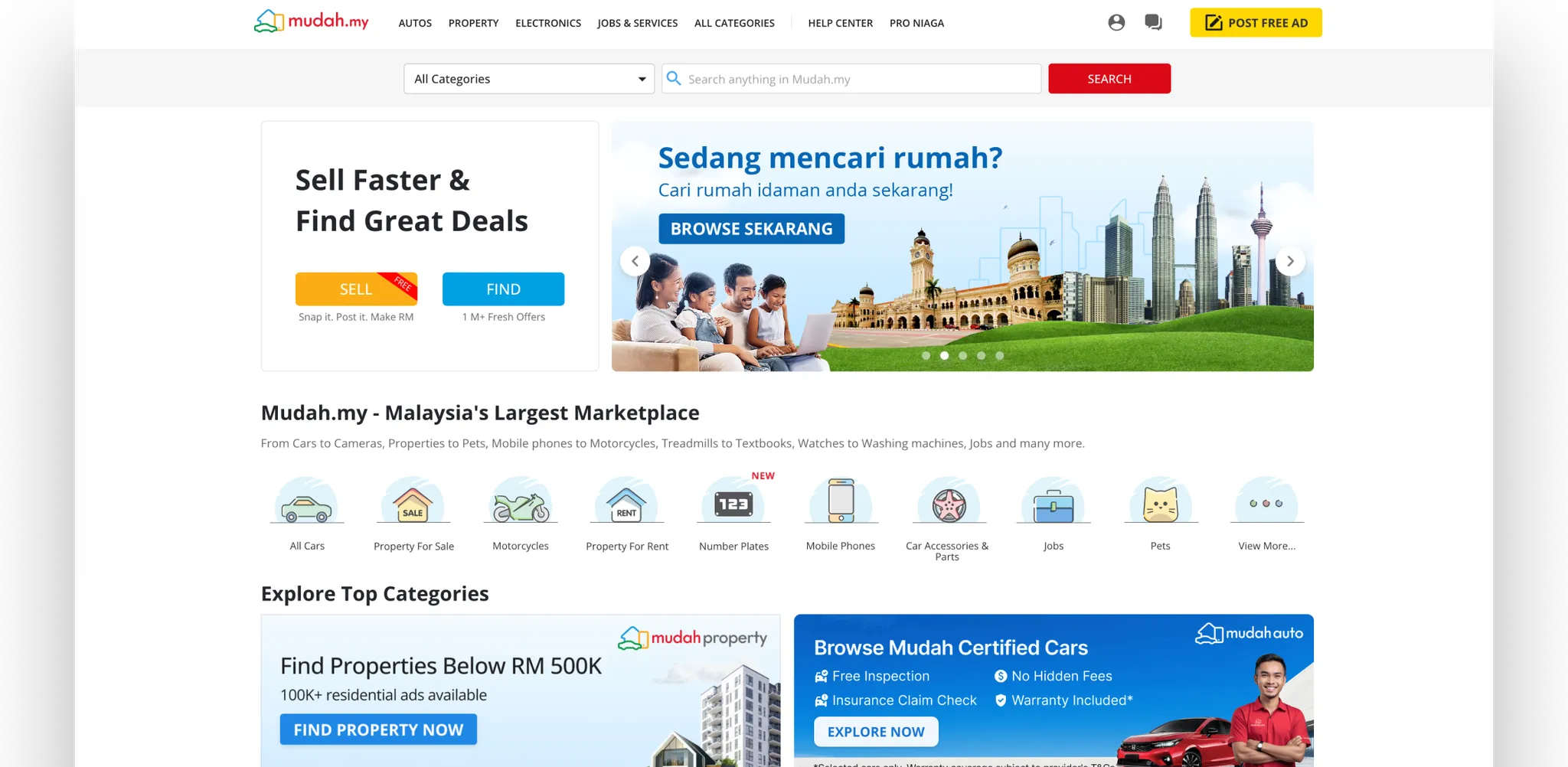
Mudah.my is Malaysia’s largest online marketplace — a joint venture of Telenor ASA and 701Search that, after a decade in operation, was carrying close to twenty per cent of the country’s internet traffic. The product worked; the stack that had carried it there did not.
The brief wasn’t a redesign. It was a controlled rebuild of a system the business couldn’t take offline — moving a monolithic PHP codebase to a modern, scalable architecture while listings kept going up, transactions kept going through, and the team kept shipping.
We embedded with Mudah’s engineers for a month on-site in Kuala Lumpur to set the cadence, then continued the work from Vietnam. The platform that came out the other side was faster, easier to extend, and built to absorb the next decade of growth — and the partnership has continued well past the initial engagement.
After more than ten years carrying close to a fifth of Malaysia's internet traffic, the Mudah.my stack was showing its seams. A single PHP monolith held catalogue, listings, accounts, and search — easy to reason about a decade ago, increasingly hard to scale, test, or hand off as the product surface grew. Page loads were drifting upward, the mobile experience felt a generation behind shopper expectations, and every new feature took a little longer to ship than the last. The team didn't have time to recruit and train into the rebuild themselves; they wanted engineers who could land and start cutting.

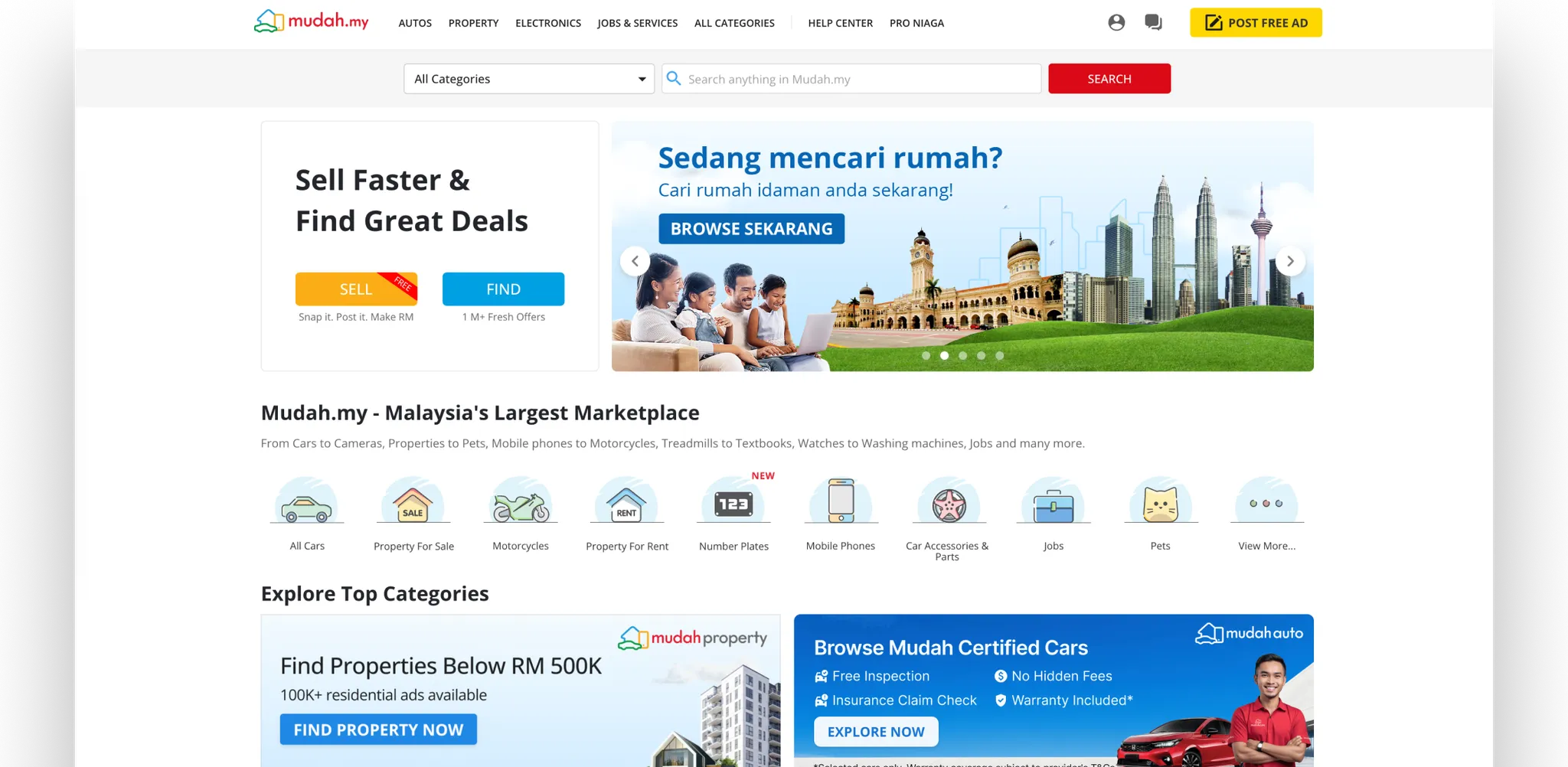
We approached the rewrite as a controlled extraction rather than a green-field. Login came out first — a small, well-bounded service that proved the path and the tooling. From there, more of the monolith fell away into Go services on Gin, talking over gRPC and persisting to PostgreSQL behind REST APIs. The web came back as Next.js with server-side rendering, which paid back twice — faster first paint for users on Malaysian mobile networks, and cleaner indexing for the search traffic the marketplace lives on. The iOS app was rebuilt in Swift 4 with a tidy MVC structure, and the whole pipeline carried 80%-plus automated test coverage as it grew.
Modernising a system that millions of people use every day is a coordination problem before it is a technical one. We worked on-site in Malaysia during the critical phases, sat in the same room as Mudah's engineers for code reviews and architecture calls, then ran daily standups and Jira-tracked progress against the wider team back in Vietnam. Slack and GitLab held the day-to-day; knowledge-sharing sessions made sure the parts we built didn't leave with us. The result was a long partnership rather than a delivery: the platform shipped, kept shipping, and we kept showing up.
“Updating our technology platform and growing revenue are the two biggest things on our plate. Doing both at once is hard. The Dwarves team gave us a result we trusted — skilled, professional, and easy to keep working with.”
A few sentences about your team and what you're building is usually enough. We reply within three working days.